MI Diagnosis in LBBB or paced rhythm
In case of a left bundelbranch block (LBBB), infarct diagnostics based on the ECG is difficult. The baseline ST segments and T waves tend to be shifted in a discordant direction with LBBB, which can mask or mimic acute myocardial infarction. However, serial ECGs may show a moving ST segment during ischemia secondary to dynamic supply versus demand characteristics. A new LBBB is always pathologocal and can be a sign of myocardial infarction. The criteria (Sgarbossa LBTB) that can be used in case of a LBBB and suspicion of infarction are:
- ST elevation > 1mm in leads with a positive QRS complex (concordance in ST deviation) (score 5)
- ST depression > 1 mm in V1-V3 (concordance in ST deviation) (score 3)
- ST elevation > 5 mm in leads with a negative QRS complex (inappropriate discordance in ST deviation) (score 2)
At a score-sum of 3, these criteria have a specificity of 90% for detecting a myocardial infarction.
Examples
-
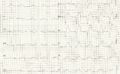 Acute myocardial infarction in in a patient with a pacemaker and LBBB. Concordant ST elevation in V5-V6 are clearly visible. There is discordant ST segment elevation > 5 mm in lead V3.
 -
 The same patient as in the first example 2 months before the myocardial infarction. Normal LBBB pattern.
 -
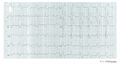 Acute MI in a patient with LBBB


References
<biblio>
- LBTB pmid=11265742
</biblio>